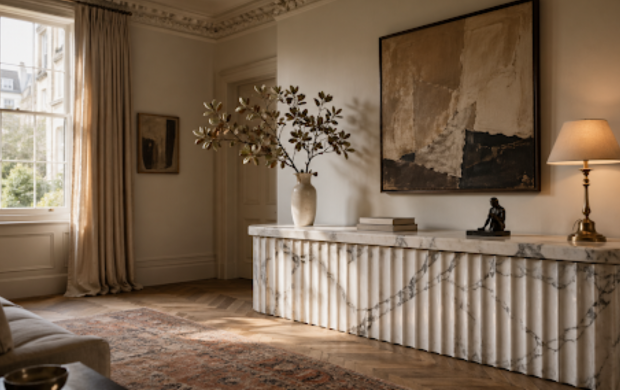
Creating a living space that feels both beautiful and truly comfortable isn’t about following rigid design rules or copying showroom displays. It’s about understanding how you actually live, what brings you joy, and how different elements work together to support your daily life whilst making you feel at home the moment you walk through the door.
Start With How You Actually Live
Before selecting a single piece of furniture or paint colour, take time to observe how you use your space. Do you curl up with books on weekend mornings? Host dinner parties regularly? Work from home several days a week? Your genuine habits should drive every design decision.
Many people make the mistake of designing for an imagined lifestyle rather than their real one. They create formal sitting rooms that remain unused whilst everyone clusters in the kitchen, or they fill spaces with delicate pieces that create anxiety rather than comfort. Honest self-assessment saves both money and frustration.
Consider traffic patterns through your rooms. Notice where natural light falls at different times of day. Identify spots where you naturally gravitate. These observations reveal what your space needs to function beautifully for you specifically.
The Foundation: Choosing Furniture That Works
Quality furniture forms the backbone of any comfortable living space. Investing in well-made pieces that suit your needs pays dividends for years, whilst cheap alternatives often disappoint within months.
Seating deserves particular attention because it directly impacts daily comfort. A sofa that looks stunning but leaves you shifting position after twenty minutes serves neither beauty nor function. Test pieces properly before purchasing. Sit in different positions. Consider firmness, depth, and height relative to your body.
The high-quality sofas from Dante Furniture demonstrate how thoughtful design balances aesthetic appeal with genuine comfort, offering pieces built to withstand daily use whilst maintaining their beauty. Whether you prefer sleek modern lines or classic silhouettes, structural integrity and comfort shouldn’t be compromised for style.
Scale matters enormously. Oversized furniture overwhelms small rooms, whilst pieces too petite for large spaces create a disjointed, unfinished feeling. Measure carefully and use painter’s tape on floors to visualise footprints before committing to purchases.
Layering Light for Mood and Function
Lighting transforms spaces more dramatically than almost any other element, yet many people rely solely on harsh overhead fixtures. Comfortable rooms require layers of light at different heights and intensities.
Ambient lighting provides overall illumination. Task lighting supports specific activities like reading or food preparation. Accent lighting highlights architectural features or artwork. Most importantly, flexible control through dimmers and multiple switches lets you adjust atmosphere throughout the day.
Natural light deserves respect in your design. Heavy curtains that block sunshine make rooms feel oppressive. Consider sheer panels for privacy whilst allowing light, or position furniture to take advantage of sunny spots without creating glare on screens.
Table and floor lamps at varying heights create depth and warmth that ceiling fixtures alone cannot achieve. Position them where you’ll actually use them rather than placing them symmetrically for appearance alone.
Colour Psychology and Personal Preference
Colour profoundly affects mood, but personal response matters more than generic colour psychology. What feels calming or energising varies between individuals based on associations, cultural background, and personal taste.
That said, some principles hold fairly universal. Lighter colours make small spaces feel larger. Darker shades create intimacy in vast rooms. Warm tones (reds, oranges, yellows) feel stimulating and social. Cool tones (blues, greens, purples) tend towards calm and contemplation.
Test paint colours on your actual walls before committing. Observe them in morning light, afternoon sun, and evening artificial light. Colours shift dramatically based on lighting conditions and surrounding elements.
Don’t feel pressured to follow trends if they don’t resonate with you. A colour scheme you genuinely love remains satisfying far longer than fashionable palettes that never felt quite right. Your home should reflect your personality, not Instagram aesthetics.
Texture Creates Depth and Interest
Flat, monotonous surfaces make rooms feel sterile regardless of colour or furniture quality. Varied textures engage the senses and create visual richness without clutter.
Combine smooth and rough, soft and hard, matte and glossy. A velvet cushion against linen upholstery. A chunky knit throw over smooth leather. A rustic wooden coffee table on a plush rug. These contrasts create tactile interest that makes spaces feel layered and intentional.
Natural materials bring particular warmth. Wood, stone, wool, cotton, and linen connect us to the organic world in ways synthetic materials cannot replicate. They also age beautifully, developing character rather than simply deteriorating.
Textiles especially deserve attention. Curtains, cushions, throws, and rugs soften hard surfaces, absorb sound, and provide opportunities to introduce colour and pattern without permanent commitment.
The Power of Negative Space
Beautiful, comfortable rooms resist the urge to fill every corner. Negative space allows your eyes and mind to rest. It gives important pieces room to breathe and makes spaces feel larger and calmer.
Edit ruthlessly. Every object in your space should either serve a function or bring you genuine joy. Items kept from guilt, obligation, or vague future usefulness create visual noise and psychic weight.
This doesn’t mean stark minimalism unless that speaks to you. It means intentionality. A carefully curated collection of meaningful objects creates more impact than scattered knick-knacks accumulated without thought.
Storage solutions that hide everyday clutter whilst keeping necessities accessible maintain visual calm without sacrificing function. Closed cabinets, attractive baskets, and ottomans with hidden compartments serve beauty and practicality simultaneously.
Personal Touches Make Houses Homes
Technical design perfection means nothing without personality. Your space should tell your story through objects, images, and arrangements that reflect your experiences and values.
Display items earn their place through meaning rather than matching. Travel souvenirs, family photographs, inherited pieces, artwork that moves you, collections you’ve built over time all contribute warmth that catalogue-perfect rooms lack.
Don’t save special things for special occasions. Use the beautiful dishes, display the meaningful artwork, burn the lovely candles. Your daily environment deserves beauty, and objects fulfil their purpose through use and enjoyment.
Plants bring life into spaces literally and figuratively. They improve air quality, add colour and texture, and connect interior spaces with the natural world. Choose varieties suited to your light conditions and maintenance willingness.
Creating Comfort Is an Evolution
Designing comfortable, beautiful living spaces isn’t a project with a fixed endpoint. Your needs change, your style evolves, and spaces should adapt accordingly.
Start with foundational pieces and build gradually. Live with your space before making all decisions. You’ll discover needs and preferences you couldn’t anticipate initially. Patience prevents expensive mistakes and allows your design to develop organically.
The most successful spaces balance aesthetic vision with daily reality, beauty with function, personal style with practical needs. When you achieve that balance, you create more than attractive rooms. You create a genuine sanctuary that supports and sustains you through all of life’s moments.