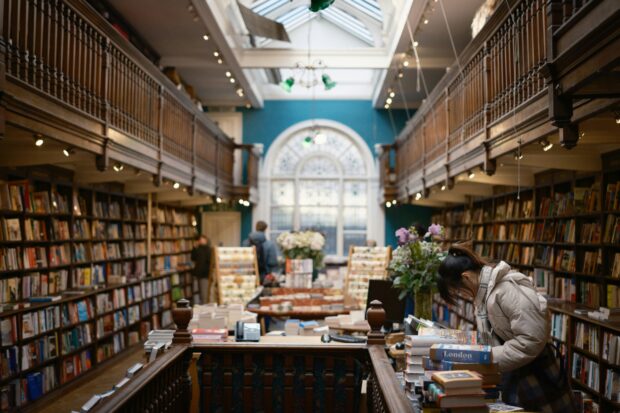
London has inspired more novels, poetry and plays than probably any other city in the world. Charles Dickens wandered its murky streets. Virginia Woolf sat in the cafés of Bloomsbury. Samuel Johnson locked himself in a townhome off Fleet Street and wouldn’t come out until he’d completed a full dictionary. For individuals who reside here or come on a semester abroad, these places are not tourist stops. They are direct pipes to the texts that fill reading lists and lecture halls each term.
The landmarks mentioned are worth the journey whether for study, a weekend walk or a vacation from revision which still counts as constructive.
Reasons to Visit Literary Landmarks
London’s literary sites are more than just photo opportunities. To stroll the same streets as a novelist, or sit in the room where a poet penned a famous ode, offers the reader a sense of place that no synopsis can convey. That kind of hands-on expertise frequently manifests in stronger, more thorough writing.
Most of these locations also have archives, original manuscripts and personal possessions that provide a broader tale than any biography. Anyone working on a research paper or essay on a particular author will find stuff here that just cannot be found on the web. Those who need a bit of assistance turning their research into a well-structured paper can easily obtain help from writers at https://edubirdie.com/ to get the format right. Any one of the locations listed below can provide enough detail in a single afternoon to last a whole assignment. Plus, many museums offer concession admission, so the trip will still be easy on the wallet. The best part is, it doesn’t feel like studying. It just feels like a nice day in London.
Shakespeare’s South Bank and the Globe Theatre
A literary tour of London is not complete without a visit to the Globe. The restored playhouse on Bankside provides Shakespeare’s work in similar conditions to the original 1599 theatre. Outdoor concerts span the summer, while the Sam Wanamaker Playhouse indoors covers the colder months with candlelit events.
It’s context that makes this place valuable, outside of the performances. Being in the pit or on a wooden bench transforms the way a reader sees Hamlet or A Midsummer Night’s Dream. The exhibition on site leads visitors through the stagecraft, costumes and social environment of the Elizabethan theatre.
A slow walk around the Globe area also pays off. The Anchor Bankside bar is 18th century and Southwark Cathedral, which is the burial place of Shakespeare’s brother Edmund, is a few minutes distant.
Dickens Museum: 48 Doughty Street, Bloomsbury
Dickens lived at this address in Bloomsbury from 1837 until 1839. Two years. Four floors. And one hell of a productivity burst. Here also came into being Oliver Twist and The Pickwick Papers. The museum has manuscripts, first editions, personal correspondence and the desk where he worked.
| Things to see | Why it’s important |
| Original writing | Shows Dickens’ editing process with scratched out sentences and replaced paragraphs |
| R. W. Buss’s Dickens’s Dream | Unfinished painting of Dickens and his own characters |
| The study and writing table | The real workshop behind some of the most-read novels in English |
| Walking tours with a theme | Walks through the streets of Bloomsbury Dickens’s references in his novels |
Open Tuesday to Sunday. Adult tickets start at about £8 with concessions.
Keats House, Hampstead
John Keats moved into this Regency mansion in 1818 and stayed there until 1820. In those two years he wrote Ode to a Nightingale and Ode on a Grecian Urn, plus dozens of letters now regarded as classics of English writing. He wrote the nightingale ode in the garden, below a plum tree. The tree has gone now, but the area is still tranquil enough to see why he used to sit there.
Among the museum’s holdings are his death mask, the engagement ring he gave Fanny Brawne and annotated volumes from his personal collection. Workshops, seasonal events and readings are held year-round.
Getting there: Hampstead Heath station on the Overground, then a ten minute stroll through one of London’s most tranquil districts.
The Bloomsbury Group and Bloomsbury
Bloomsbury has a segment of its own not for a single building but for the density of literary history crammed into a few streets.
- Gordon Square was the heart of the Bloomsbury Group, with Virginia Woolf, E. M. Forster, Lytton Strachey and others meeting regularly here
- Senate House Library has around three million volumes and inspired the Ministry of Truth in Orwell’s 1984
- The British Library holds original manuscripts by Jane Austen, the Brontës and Lewis Carroll, all viewable for free in the Treasures Gallery
Bloomsbury’s Ongoing Importance
These sites are within walking distance of a number of London universities. There are reading rooms, archives and booksellers, but Bloomsbury is still an active literary neighbourhood, not a preserved one. Skoob Books on Marchmont Street has cheap used academic materials while the cafés along Store Street have been reliable essay-writing sites for decades.
Poet’s Corner, Westminster Abbey
Since it buried Geoffrey Chaucer in 1400, Westminster Abbey corner has recognised writers. The south transept, Poet’s Corner, has tributes to over a hundred authors.
A few names worth pausing over:
- Geoffrey Chaucer was buried here in 1400, the first writer to be commemorated in the Corner
- Charles Dickens was buried here in 1870, against his own wishes for a modest burial
- Jane Austen received a memorial stone in 1967, more than 150 years after her death
- The last important additions were a tribute to T. S. Eliot in 1967
There is an entry fee (£27 for adults) to the Abbey however attending a service is free and offers access to most of the building.
The Sherlock Holmes Museum: 221B Baker Street
This one challenges the definition of a literary landmark. Sherlock Holmes never existed and 221B Baker Street was a fake address when Arthur Conan Doyle penned it. The museum has recreated the detective’s sitting room in period accuracy, including chemistry equipment, a violin and correspondence pinned on the mantelpiece.
The museum has ambiance for enthusiasts of Victorian detective fiction. The gift shop has its own complete floor.
A Good Route for a Literary Day Out
The Globe, Southwark Cathedral, Tate Modern for lunch, then across the river to Westminster Abbey, all in one day. Day two covers Bloomsbury and Hampstead easily, with plenty of time for a lengthy sit in the grounds at Keats House.
Last Words on the London Literary Trail
London doesn’t bury its literary legacy behind glass cases and velvet ropes. Much of it is interlaced with ordinary streets, bars and residential squares which anyone can wander on a free afternoon. Curiosity gets rewarded in the city. In Bloomsbury a false turn can lead you past Virginia Woolf’s old porch, and a riverside walk from the Globe typically ends with an impromptu halt at a 300-year-old tavern. These monuments transform London from a background into a character in its own right for readers, writers or simply lovers of a good story.