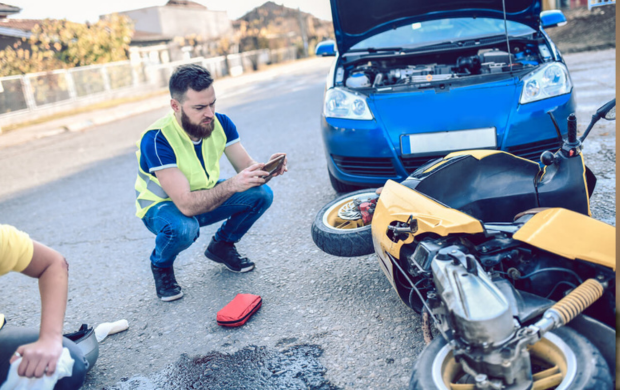
Getting knocked off your bike is a shock, even when it’s minor. Your instinct might be to jump up and check your bike, or to get straight into it with the other driver. Neither is a good idea. The steps you take in those first few minutes can affect your safety, your bike, and any claim you’re entitled to make later.
There’s a lot to unpack here, so read on for a clear, practical guide to exactly what you should do next.
Step One: Get Safe and Stay Calm
If you can move, get yourself out of the road. Don’t remove your helmet unless you’re in immediate danger, as a crash helmet can offer some support if you’ve sustained a neck or head injury. Turn off your engine if it’s still running, and get to the pavement or a safe distance from traffic.
If you’re on a busy road here in West London or anywhere else with fast-moving traffic, keep your high-vis on if you’re wearing one. It’s easy to become invisible to other drivers once you’re off your bike.
Step Two: Exchange Details With the Other Driver
Exchange details with the other party: name, address, phone number and insurance information. If they’re reluctant to give you anything, take a photo of their number plate straight away. You have a legal right to ask for this information at the scene.
Don’t admit fault, even if you feel flustered or you’re not sure what happened. A simple “let’s just swap details” is enough. Anything you say at the scene can be used further down the line.
Step Three: Collect Evidence While It’s Fresh
Your phone is your best tool here. Photograph the positions of both vehicles, any skid marks, damage to your bike, the road surface, signage, and any visible injuries. If there are witnesses, ask for their contact details. People move on quickly, so don’t wait.
Those who handle these accident claims regularly will tell you that strong photographic evidence gathered at the scene makes a real difference to how a case progresses. Blurry or incomplete evidence often leads to delays and disputes.
Step Four: Seek Medical Attention, Even If You Feel Fine
Adrenaline is powerful. You might feel completely fine at the scene and only notice pain or stiffness the following day. It’s worth getting checked over by a doctor as soon as you can, both for your health and for any record that may be needed later.
Don’t dismiss soft tissue injuries or what feels like minor bruising. These can develop into something more significant, and having a medical record from close to the time of the accident will support any claim you make for compensation.
Step Five: Get Accident Claims Out of the Way
After an accident, insurance is not the first thing you’d think about. It’s not even the third. But it still needs doing. A lot of riders go straight to their insurer, but this isn’t always the best first call. Going through your own insurance could mean paying an excess and risking your no-claims discount, even when the accident wasn’t your fault.
If the accident wasn’t your fault, an accident management specialist who deals with motorbike accident claims is often a much better option. They’ll deal directly with the at-fault driver’s insurer, arrange repairs using specialist motorbike repairers, and can provide a like-for-like replacement bike while yours is off the road. Many work on a no-fee basis, meaning you won’t pay anything for the service.
If You Need to Call the Police
In some cases, the police will attend the scene automatically, especially if someone is injured. If they don’t attend but you want to report the accident, you’ll need to do so at a local police station within 24 hours if you didn’t exchange details at the scene.
You’ll receive an incident reference number, which you should keep safely in your records, ready to reference at any point.
Closing Up
The immediate aftermath of a motorbike collision is stressful and disorienting. But staying calm, collecting evidence and getting the right advice early will put you in a much stronger position.
Don’t let the chaos of the moment lead you into decisions that could cost you later, whether that’s admitting liability, skipping a medical check, or calling the wrong number first.