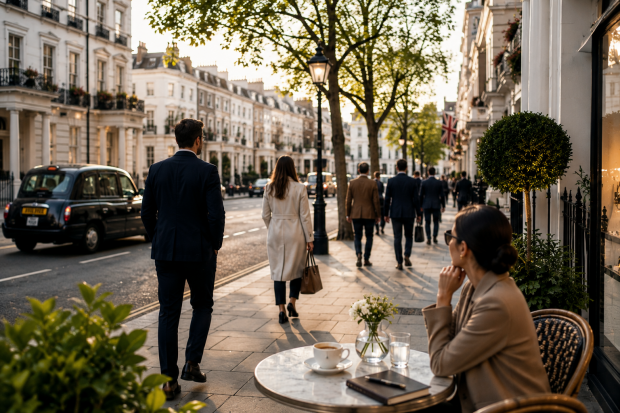
There is a familiar image of the wealthy. They live somewhere between Chelsea and Kensington, shop on Bond Street, dine in Mayfair and disappear to the country—or somewhere considerably warmer—at the weekend.
It is an appealing picture, but not a particularly useful one.
The Myth of the Typical Wealthy Londoner
London’s wealthy consumers may frequent the same private clubs, hotels, galleries and luxury brands, but those choices do not necessarily reflect the same priorities. For one person, luxury is rooted in heritage and long-established relationships; for another, it means speed, privacy and seamless service. A younger inheritor may place greater value on wellness, sustainability or social impact than on traditional signals of status.
“Wealth can indicate what somebody is able to spend, but it says far less about what they value,” says Phronesis Partners.
This is why the lifestyle changes reshaping London’s most desirable neighbourhoods cannot be understood through income or postcode alone. How people use their homes, structure their days and spend their free time can reveal more about their priorities than their spending power does. Specialist UHNWI market research can explore the motivations and circumstances behind those choices rather than treating wealth as a reliable guide to taste.
Global Wealth Creates Different Relationships with London
For some affluent consumers, London is home in the fullest sense. It is where their family lives, their children attend school and their most trusted personal and professional relationships are based.
For others, it is a city they move through.
They may visit for business, specialist healthcare, education, shopping, cultural events or a few weeks of the social calendar. Their London experience needs to work immediately, without the gradual familiarity available to a permanent resident.
A local customer may appreciate being recognised by name in a neighbourhood restaurant. A visitor with limited time might value a concierge who can organise an entire itinerary without repeated explanations. One wants a sense of belonging; the other wants effortless access.
London’s position as a global centre for business, culture and professional services means these audiences often occupy the same spaces. Yet proximity should not be mistaken for similarity.
A person viewing a private collection in Mayfair, booking a suite in Knightsbridge or attending an event in Chelsea may be motivated by investment, convenience, social connection, cultural interest or simple enjoyment. The activity may look the same from the outside, but the reason behind it may not be.
Old Wealth, New Wealth and the Next Generation
The source and stage of wealth can also influence how it is expressed.
Traditional luxury often relied on recognisable signals: the right address, the right membership and brands whose prestige was widely understood. Those signals have not disappeared, but they now sit alongside more personal definitions of value.
Younger wealthy consumers may still buy exceptional products, but they are often interested in the provenance, purpose and experience surrounding them. A beautifully made item from an independent studio may hold more appeal than an instantly recognisable logo, while active involvement in philanthropy may feel more meaningful than financial support alone.
Older generations should not automatically be characterised as conventional, nor younger consumers as uniformly progressive. Family background, life stage and personal experience shape preferences in ways that a financial threshold cannot capture.
Luxury Means Different Things
West London offers a clear illustration of this diversity.
For one person, luxury may mean a private appointment on Bond Street with everything prepared before they arrive. For another, it is browsing an independent boutique in Notting Hill without being recognised or interrupted.
One household may invest in a formal entertaining space designed for large gatherings. Another may prefer the growing culture of private leisure in West London, where a carefully planned evening at home feels more appealing than another crowded opening.
Even convenience is not universal. One customer may want every decision handled on their behalf, while another expects control over each detail and regards excessive assistance as intrusive.
Trust Matters More Than Recognition
Luxury brands have traditionally invested heavily in being known. Among wealthy consumers, however, recognition does not necessarily produce trust.
A prestigious name can create interest, but a recommendation from a respected friend, adviser or family member may carry considerably more weight. This is particularly true when a decision involves privacy, personal wellbeing or a long-term relationship.
Many successful premium services grow through networks that are largely invisible from the outside. A trusted property adviser introduces an interior designer, or a private banker recommends a specialist lawyer.
For businesses, this means the experience cannot be separated from the people delivering it. An impressive setting may attract a customer once, but judgement, discretion and consistency are more likely to bring them back.
It also explains why aggressive personalisation can be counterproductive. Remembering a customer’s preferences can feel thoughtful; revealing how much information has been collected about them can feel unsettling. The difference depends on context and the trust already established.
What Brands Need to Understand
Businesses serving affluent audiences do not necessarily need to offer more. They need to understand more precisely what matters, to whom and in which circumstances.
That means moving beyond broad ideas about exclusivity. Limited access will appeal to some customers, while others are more interested in convenience, expertise or emotional meaning. Visible prestige may reassure one person and alienate another.