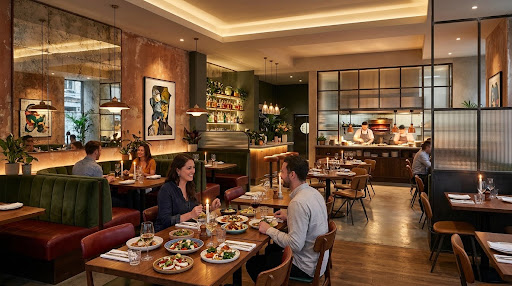
A dining experience actually begins before the first dish ordered is served. The entrance, lighting and decoration can instantly create an atmosphere. In London’s competitive restaurant industry, the design and interior of the restaurants are gaining importance in the overall experience provided by restaurants. Of course, food is an integral part of the dining process, but the place where you eat adds to the overall impression formed about the restaurant.
How Does Restaurant Design Shape First Impressions?
The first impression that diners have of a restaurant is formed during the first few minutes. Aspects like light can create a cozy atmosphere or give a sense of excitement. Use of colors and materials infuses a room with a sense of homeliness, elegance or informality. Also, furniture choice and table arrangement add to the general feeling.
One of the popular media sources in West London, West London Living, publishes restaurant reviews that take into account the mentioned factors in the evaluation. For example, in its July 2016 article, the publication describes the intimate atmosphere at Don’t Tell Dad restaurant in Queen’s Park, where terracotta walls, flaked mirrors, green velvet, fluted glass, an open kitchen and red leather booths were some of the elements creating the right ambience.
These factors are time-consuming, as they affect how the customers perceive the restaurant before they get to know about it in detail.
Why Does Layout Matter Beyond Aesthetics?
The design of the restaurant has a practical purpose. The space between tables affects how private or social the experience will be. An open kitchen actively involves customers in food preparation. Communal tables encourage social interaction.
These elements influence decision-making, communication, and socialization of the guests. A dining room that is well designed but uncomfortable will not fulfill its purpose and the message it is supposed to send.
How Can Interiors Reflect a Restaurant’s Identity?
Interior design has the ability to reveal information about a restaurant and its food before one has even had a chance to eat. Elements such as materials, art, architecture, and decorative features can hint at the type of cuisine or the time period of a particular restaurant.
This connection between interior design and the identity of the restaurant can be found in restaurants across the city of London. An example being that of Riviera, whose West London Living review describes a restaurant that created an interior inspired by the South of France through a mixture of natural materials, mid-century furniture, and pastel colors.
Why Are Restaurants Designing Experiences Rather Than Just Dining Rooms?
In today’s world, modern establishments are bringing more sensory aspects into their services. The food served is one of the things working together with the interiors, lighting, music, service and presentation. However, this may not mean using an elaborate concept in every place.
For example, a neighborhood restaurant may consider it important to create a homelike atmosphere.
Meanwhile, a prominent restaurant can employ unusual design solutions for creating the ambience of an unusual evening.
Below are some examples of the places mentioned above.
Can Restaurant Design Influence What Diners Remember?
Memorable restaurants often give diners several things to recall, not just a particular dish. A distinctive room, an interesting view, striking artwork or an unusual layout can become part of the story people tell about a meal.
Social media has also made visual presentation more visible, much like how visually distinctive spaces can attract attention across digital platforms such as PHarcade. However, designing a restaurant around photographs alone can miss the point. The strongest interiors tend to work in person, creating a comfortable and coherent environment rather than simply providing a backdrop for pictures.
What Makes a Restaurant Interior Work?
Effective design of a restaurant does not necessarily include the use of costly furniture or stunning pieces of decor. It implies that the ambiance complements the restaurant’s main idea.
A high-end restaurant may aim for creating an atmosphere and forming a close relation with diners, while a fast-casual restaurant may need a more open and lively vibe. A local restaurant will need to create a more pleasant feeling for their customers.
Conclusion
The interior design of restaurants can never replace good food or good service, but it can still have an impact on the way that these are perceived. As London’s dining culture continues to change, restaurants themselves are becoming part of the experience. The best restaurant interior designs are not simply appealing; they also create an environment that connects the food, the place and the dining experience altogether.