A material with centuries of staying power
Few household details bridge the gap between function and character as effectively as a door handle. It is touched every day, seen in passing, and often overlooked—until it feels cheap, awkward, or out of place. Brass, by contrast, has a way of making even this small interaction feel considered.
Its appeal is not simply about a warm golden finish. Brass has been used in architectural hardware for centuries because it is workable, durable, and naturally suited to intricate craftsmanship. From Georgian townhouses to Victorian terraces, Arts and Crafts cottages to contemporary apartments, brass hardware has repeatedly adapted to changing tastes without losing its identity.
That adaptability is one reason it has endured. A polished brass lever can look crisp and formal against a dark-painted front door; an aged or unlacquered finish can bring depth to reclaimed timber and limewashed walls. The same material can feel restrained in a minimalist interior or richly decorative in a period restoration. Unlike trend-led finishes that can quickly date a room, brass tends to settle into its surroundings.
There is also a sensory quality to it. Brass has a satisfying weight in the hand, and its surface changes subtly with use. In a home increasingly filled with smooth screens and disposable materials, that tactile presence matters. A door handle may be a practical object, but it is also a repeated point of contact with the building itself.
Brass gains character rather than simply wearing out
The value of a living finish
Many finishes are designed to look exactly the same for as long as possible. Brass takes a different approach. Depending on its treatment, it can develop a patina over time: a softening of shine, deepening of colour, and occasional variation around the points most frequently touched.
For some homeowners, that evolving finish is precisely the attraction. It gives a new property a sense of warmth and makes an older building feel more authentic. Unlacquered brass, in particular, responds to the environment around it. Humidity, handling, cleaning methods, and sunlight all influence its appearance, meaning no two pieces age in exactly the same way.
That does not mean brass must always become dark or antique-looking. Polished brass can be maintained for a brighter appearance, while satin and aged finishes offer a more muted alternative from the outset. The important consideration is choosing a finish that suits how you want the space to feel—and how much maintenance you are realistically prepared to undertake.
It works across architectural styles
Brass is often associated with traditional interiors, but that connection can be too narrow. It has roots in historical design, certainly, yet its enduring value lies in its range. The right handle profile can establish a clear relationship between a property’s era and its current use.
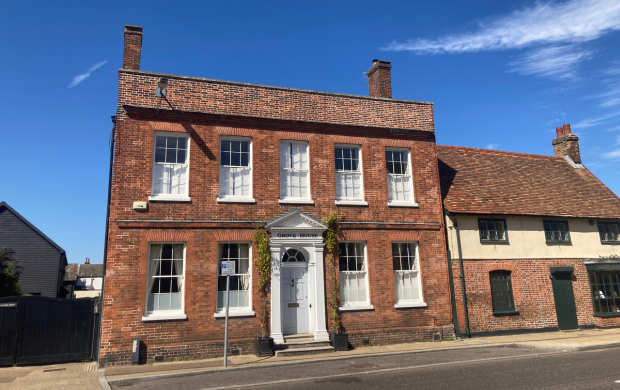
In a Georgian or Victorian home, for example, choosing traditional brass door furniture with a classic lever shape or detailed backplate can reinforce the original architectural language without making the interior feel like a museum. The aim is not necessarily perfect historical reproduction. It is coherence: hardware that looks as though it belongs with the doors, mouldings, and proportions already present.
In newer homes, brass can provide contrast. Clean-lined lever handles in satin brass work particularly well with pale oak, deep green cabinetry, off-white walls, and natural stone. They add visual warmth without overwhelming a simpler scheme. Even in industrial-style spaces, where black steel and concrete are common, brass introduces a welcome note of softness.
Proportion matters as much as finish
A timeless choice is rarely about material alone. Handle size, backplate shape, door thickness, and surrounding joinery all affect the result. An ornate handle can look cramped on a narrow modern door, while a very slim lever may feel insubstantial on a tall, panelled internal door.
Before selecting hardware, consider the scale of the room and the doors themselves. Larger entrance doors often suit more substantial fittings, while bedrooms and bathrooms can accommodate lighter, quieter designs. Repeating a related finish throughout the house creates continuity, but every handle does not need to be identical. A front door knob, cabinet pull, and internal lever can share a finish while performing distinct visual roles.
Durability supports the timeless look
The best timeless interiors are not frozen in time; they are built to be lived in. Brass performs well here because it is a robust alloy, particularly when used in solid form rather than as a thin decorative coating over a less durable base metal.
This distinction matters. Solid brass hardware generally has greater weight, can often be refinished, and is less vulnerable to exposing a contrasting material beneath the surface if scratched. Over years of use, that makes it a practical choice for high-contact locations such as entrance doors, kitchens, and busy hallways.
Brass also has naturally antimicrobial properties, a characteristic long recognised in public-facing settings. While that should not replace ordinary cleaning, it is another example of how the material’s practical qualities support its long-standing use.
Maintenance is usually straightforward. Dust and fingerprints can be removed with a soft cloth, while harsher abrasives should be avoided unless a deliberately bright polish is desired. For lacquered pieces, gentle cleaning helps preserve the protective coating. For unlacquered brass, the question is more personal: preserve the patina, or polish it back to a brighter finish? Neither choice is wrong.
A small detail with an outsized effect
Door furniture is often selected late in a renovation, after flooring, paint, lighting, and cabinetry. Yet it has an unusually broad influence because it appears across so many rooms and is used constantly. It can either make an interior feel pieced together or quietly pull it into focus.
Brass remains timeless because it offers more than nostalgia. It is adaptable, tactile, repairable, and visually generous. Whether used to honour a period property or to bring depth to a contemporary one, it rewards thoughtful selection and improves with familiarity. In a world of fast-changing interiors, that is a quality worth holding onto.