London has an amazing range of restaurants, concerts, galleries, parks and neighbourhoods, but some people want to get away from the hustle and bustle… and the rain. Valencia, on Spain’s Mediterranean coast, offers many similar delights on a smaller scale, with warmer weather (Christmases of around 15-20° and summer highs of about 35°), and delicious food.
Valencia’s layout encourages you to spend time outdoors. For Londoners used to crowded trains, expensive evenings out and lengthy trips across the capital, Valencia might be the perfect alternative. People planning to move to Spain may like to research London removal services, especially those with experience helping people move across Europe and the rest of the world.
A wonderful green corridor running through the city
One of Valencia’s most famous features is the Jardín del Turia, public gardens running through the city. The paths were created in the former bed of the River Turia after floods in 1957. The green corridor stretches for about nine kilometres.
For people who love parks like Hyde Park and Regent’s Park, the Turia gardens might offer a sense of home and peace (though something a little more exotic). People cycle beneath bridges, skate and jog along the paths, or watch the world go by on a bench or sitting on the grass.
As well as being beautiful, the park is a good way to cross the city on foot or by bike without spending the whole time beside busy roads.
It’s also possible to reach Bioparc Valencia from the gardens. The park replicates the wonderful and varied animals’ natural habitats of wetlands, jungles, and savannahs, and they roam across 100,000 square metres.

Cycling without making a day of it
Valencia is relatively flat, and its cycle routes make getting around a bike very manageable. The Turia gardens have dedicated cycle lanes that extend into many surrounding streets.
London has invested heavily in cycling infrastructure, but riding through the capital can still involve negotiating busy junctions, traffic and complicated routes. Valencia is different and rather more peaceful, even in many central areas, and the shorter distances and flatter terrain make it easier.
Walking is enjoyable too, with many central attractions within a manageable distance of one another. A visit to a market, café, or public square generally doesn’t need several changes on a bus or the tube (Valencia’s equivalent is Metrovalencia).
Eating well without booking weeks ahead
Valencia’s food culture is rooted in local produce, rice dishes and the Mediterranean coastline. Its famous paella originated from local rice cultivation and has shaped cooking for centuries.
At the Mercado Central, one of Europe’s largest covered food markets, stalls sell fresh fruit, vegetables, seafood, cheeses, cured meats and other local ingredients. The market makes for a nice morning stop.
Locals often enjoy a hearty lunch, with restaurants serving rice dishes as well as fish, seasonal vegetables and traditional stews.
Londoners used to paying high prices for restaurant meals will likely notice the difference, particularly at the more casual neighbourhood spots. Costs unsurprisingly vary a lot by location and venue, but there’s good value to be found eating outside the most heavy tourist areas.
A beach well within reach
Malvarrosa Beach is a short journey from the city centre, making a morning by the sea or an evening walk along the promenade nice and easy to fit into the day. On a weekend, you might spend the morning exploring the old town, have lunch near the waterfront and get back to the centre for another outdoor meal in the evening.
Outdoor activities are popular through much of the year, given the Mediterranean climate. Volleyball is often played on the beach and groups like Volley Valencia and Beach Volleyball Valencia organise regular games.
History, architecture, and culture
The Valencia Cathedral and the surrounding streets provide a glimpse of the city’s long history. Nearby, the Plaza de la Virgen is a nice spot to outdoors and watch local life unfold. The whole historic centre will be interesting to anyone keen on architecture.
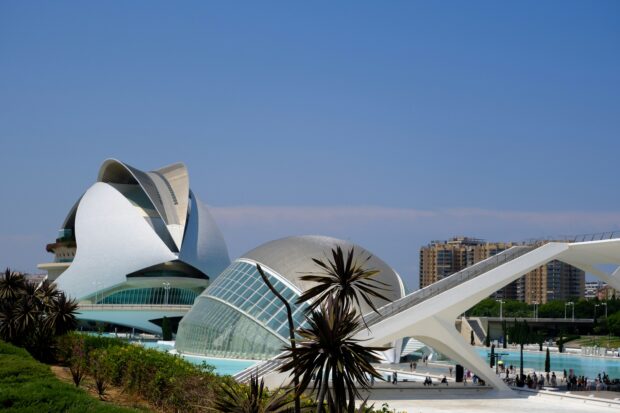
Elsewhere, the City of Arts and Sciences is a striking (and rather beautiful) contrast. Designed by Santiago Calatrava and Félix Candela, the complex includes Europe’s largest aquarium (over 500 marine species), an IMAX cinema and planetarium, and L’Umbracle, a picturesque sculpture garden. It’s a nice walk from Turia gardens to the complex.
An outdoors social life
London has a lively street culture, but the weather, property costs and busy schedules can make spontaneous outdoor gatherings less likely (and, well, wetter). Valencia’s weather means more opportunities to meet outside.
The city also has a busy calendar with cultural events, including Las Fallas, held in March. The festival’s origins are disputed, but one theory is that carpenters would burn old materials before St. Joseph’s Day. During the celebrations, the streets fill with fantastic sculptures (often papier-mâché), festivities, and fireworks.
Valencia isn’t a substitute for everything in London. There are fewer major cultural institutions, a smaller professional scene, and it’s a different pace of life. For anyone seeking something different and just as fascinating, though, Valencia’s combination of green space, beaches, good food and walkable streets makes quite a compelling case.