Ask someone who actually lives west of Hyde Park where West London is and you get a street, not a border. It is Golborne Road on a Friday. It is the towpath between Little Venice and the Harrow Road. It is the one bench in the park that catches the morning sun.
Ask again a week later and you might get a different street entirely.
The postcode is almost incidental. What holds the place together is a set of addresses people keep in their heads and hand to each other quietly, the way a neighbourhood passes on the things worth knowing.
Some are places. Some are habits. A few are simply names. This is part of that list.
1. Golborne Road, for the morning
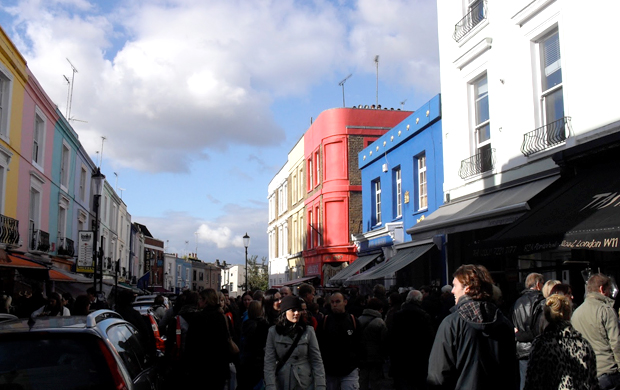
Everyone knows Portobello. The visitors gather around the antiques stalls near Notting Hill Gate on a Saturday, and that is the postcard.
The locals are further north, on Golborne Road, where the Portuguese and Moroccan cafes have fed the neighbourhood for decades and the market stalls fill the middle of the road on a Friday.
A custard tart and a galao at Lisboa Patisserie, taken standing because the few tables went an hour ago, is closer to the real West London morning than anything you will find nearer the Tube.
2. Books for Cooks, Blenheim Crescent
A shop that sells nothing but cookery books and, at the back, cooks lunch from them. Three courses, a tiny room, whatever the test kitchen felt like making that day.
The recipes on the plate are usually for sale on the shelves behind you, which is the whole charm of it.
It has been there since the early 1980s and still catches out people who thought they knew the area. Go before noon or you will not get a seat.
3. The Electric Cinema, Portobello Road
One of the oldest working cinemas in the country, and proof that some places grow up without growing out. It kept its sofas, footstools and bar rather than turning into a multiplex, and it still runs new releases alongside the odd classic.
There is a small bar and a restaurant beside it, so the evening can start before the lights go down. You book it for the room as much as the film, and on the right night the room wins.
4. The pubs that refused to be tidied away
The Cow, on Westbourne Park Road, is a small green-tiled corner that does Guinness and oysters and little fuss, and it has seen off more than one attempt to smarten it up.
Down by the water in Hammersmith, The Dove holds a Guinness World Record for the smallest bar room in any public house and has been serving by the river for centuries.
Sit outside on a summer evening and the Thames does the rest. Neither pub has any wish to be anywhere, or anything, else. That is the point of them.
5. The tables worth the postcode
For all the talk of the King’s Road, the neighbourhood’s best tables are quieter than the reputation suggests. The Ledbury, on a Notting Hill side street, reopened after two years dark and now holds three Michelin stars, yet still feels like a local that happens to be extraordinary.
In Fulham, The Harwood Arms is one of the very few London pubs to hold a Michelin star, built almost entirely on British game and produce. And the old Michelin House on Fulham Road, all stained glass and mosaics, has Bibendum back inside it again after a break.
Book any of them well ahead, because none of them survive on passing trade.
6. Clifton Nurseries and the canal
Behind the villas of Little Venice sits London’s oldest garden centre, a walled acre of plants with a cafe that people walk past the gate to for years before someone finally takes them in.
Bring a coffee out into the courtyard and you can lose an hour without noticing. Step onto the canal from Warwick Avenue and you find West London’s quietest room: joggers, narrowboats, the odd heron, and almost no one else on a weekday morning.
Follow the towpath far enough and it carries you to Camden, but the stretch around Little Venice is the one to keep.
7. Notting Hill Carnival, the weekend everyone plans around
Every August bank holiday the streets are handed over to the largest street festival in Europe.
West London either throws itself in or leaves town, and there is no middle position.
The sound systems, the Trinidadian food and the crowds belong to the area as much as any building does. It is worth knowing which kind of local you are before the Friday.
8. The name you are given, not the one you look up
West London has always kept a second address book above the printed one. It is the concierge who finds a table when the restaurant is full, the members’ club off the Portobello end, the tailor who keeps your measurements on file.
Discretion is the currency here, and the best names travel between people who trust each other rather than through advertising.
Refined company for a private dinner or an evening out belongs on that same quiet list, which is where a name like Kings Lover sits: a London agency known for its discretion and for matching the right company to the occasion.
It is the sort of number you are handed rather than one you go searching for.
Keep the list short
That is the West London way. The best of it stays slightly out of sight, on side streets and towpaths and behind unmarked doors, and it is handed over in person rather than searched for.
Keep your own list short. Guard it a little. That, more than any single address, is the charm of the place.