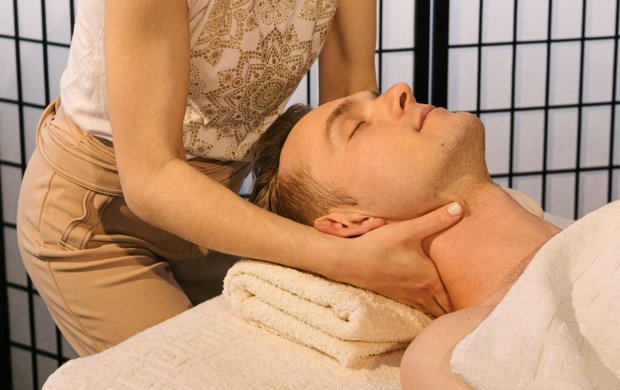
There’s a building on Palatine Road in Northenden, ten minutes from Manchester Airport, that has been quietly doing the same thing since 1984.
No rebrand. No pivot to wellness. No co-working annex or cold-brew tap. Just a massage parlour that has outlasted five recessions, three changes of government, the death of the high street, and the birth of the influencer economy. Forty years. Same address.
I think about places like this more than is probably healthy. The ones that survive not because they cracked an algorithm but because they figured out something real about what people actually want. While the rest of us were busy discovering that the boutique hotel with the neon sign and the artisanal minibar didn’t quite hit the way the Instagram made it look, somewhere in South Manchester, a lady named Julie was getting on with it.
There’s a lesson here. Several, actually.
On Staying Power
Soho House launched its first location in 1995. It has since expanded to 42 cities, gone public, and spent years explaining to shareholders why its members keep cancelling their subscriptions. Ladybirds, a tantric and erotic massage house in Manchester, opened eleven years ago and has never had to explain itself to anyone.
That’s not a trivial comparison. It’s a question about what makes a service actually stick.
The wellness industry is worth north of £5 trillion globally, and it spends a remarkable amount of energy making you feel like you haven’t found the right thing yet. There’s always a newer modality, a better breathwork facilitator, a sound bath with superior acoustics. The pitch is always in the future tense: try this; it’ll change how you feel. The result is an industry full of places that are very good at opening and not particularly good at lasting.
Contrast that with the businesses that have no marketing department and no concept refresh coming in Q3. The ones where the service itself has to do all the talking, because there is nothing else.
What Forty Years Actually Means
A business that survives four decades in the adult services sector has cleared a bar that most businesses never attempt. The regulatory environment shifts. Public attitudes shift. The internet arrives and reorganises the entire customer acquisition model. New competitors appear constantly because the barriers to entry look low until they aren’t.
What it takes to last, in any sector, but especially in one with this much social friction, is a combination of things that can’t be faked: genuine repeat custom, discretion clients actually trust, and a quality of service people feel comfortable returning to. Word of mouth in this context isn’t a marketing strategy. It’s the only strategy, and it requires the word to consistently be good.
Forty years of that is worth paying attention to.
The Confidence of Not Needing to Explain Yourself
There’s a particular kind of confidence that comes from genuinely knowing what you are. You see it in long-running restaurants that haven’t updated their menu in fifteen years and still have a wait list. You see it in the independent tailors on Savile Row that don’t have websites because they’ve never needed one.
What you almost never see it in is the wellness space, which is deeply anxious. Constantly repackaging, rebranding, reaching for the next certification that will justify the price point. A business that has been offering tantric massage in Manchester for four decades, listed at a fixed address with a fixed phone number and a reputation established entirely on the actual experience, is doing something the wellness industry mostly can’t: it trusts that what it provides is enough.
That’s not a small thing. In an attention economy built on manufactured need, a service that creates genuine repeat demand without manufacturing it is almost structurally unusual.
The Soho House Problem
Soho House’s most recent shareholder letter was candid about its membership challenges. Broadly, it attracted people who wanted to feel like they were somewhere exclusive, discovered that exclusivity is hard to maintain at scale, and ended up with spaces that struck as a bit like a very aesthetically considered WeWork.
The problem isn’t the furniture or the food. It’s that a membership club built on the idea of who else is there depends entirely on who else is there. Once the wrong people get in (by which I mean: people exactly like you and me who got a discounted referral code), the whole thing deflates.
A service built on personal experience, on something that happens between you and no one else, doesn’t have this problem. There’s no dilution effect. Quality is either there or it isn’t, and forty years is a long time for it not to be.
What This Has to Do With You
Nothing, probably, if you’re not heading to Manchester. But the underlying principle travels.
We spend a lot of time chasing things that have been carefully designed to look valuable, and not nearly enough time paying attention to the ones that have quietly proven it. The best restaurant you’ve ever been to probably didn’t have a PR firm. The best haircut of your life was presumably from someone who’d been cutting hair in the same chair for twenty years.
There’s something worth recovering in that instinct. The one that trusts duration over launch noise, that recognises a business still standing after four decades as evidence of something rather than a reason to look for something newer.
Ladybirds has been at 309b Palatine Road, Northenden, since 1984. They don’t have a newsletter. They don’t need one.
If you’re curious what forty years of that looks like up close, their site is exactly what you’d expect: simple, unadorned, and entirely confident.