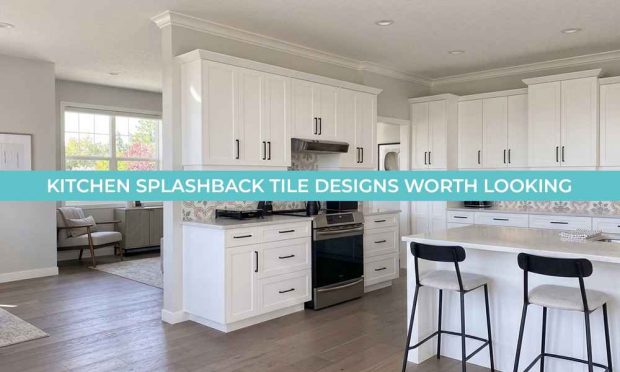
From Herringbone to Terrazzo Style: Kitchen Splashback Tile Designs Worth Looking
A kitchen backsplash works harder than any surface in a house. They endure spills, heat, and daily wipe-downs but still manage to anchor the whole room. This combination is exactly why tiles remain a default choice for the job. However, tiles no longer only mean one safe, neutral and low-maintenance option in the kitchen.
Across modern English homes, splashback tiles have become one of the easiest ways to add colour, texture and character to a kitchen without committing to a full kitchen renovation. A change of tile instantly shifts the mood of your cooking space from clinical to a characterful one, often for the cost of a single wall.
Below are the 11 best kitchen splashback tile ideas worth considering, along with a few practical notes on which suits best.
Splashback Tile Ideas to Inspire Your Kitchen Design
We have jotted down some of the most popular kitchen backsplash ideas so that you can find inspiration for your next kitchen makeover.
From porcelain kitchen tiles and natural stone to decorative patterns, there’s a splashback style to suit every kitchen.
Herringbone: A Timeless Layout
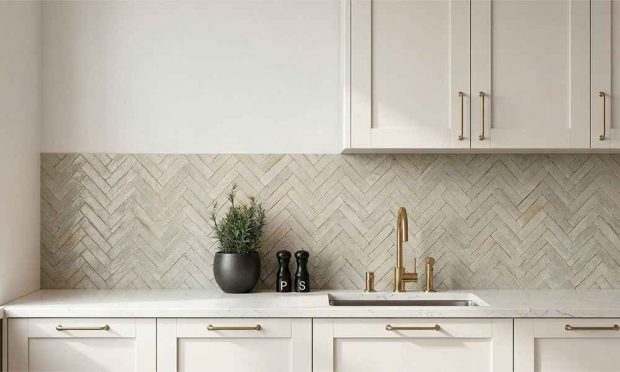
As one of the most requested splashback layouts, herringbone tiles come in a zigzag arrangement that adds movement to a wall without needing a single patterned tile.
It reads as a classic in a country kitchen, mostly using natural stone tiles like Dijon limestone with painted cabinetry. It works charmingly in modern spaces too, where minimalistic neutral tones are demanded.
| Pro Tip: Designers often recommend a similar grout colour to the tile to read the pattern as a texture rather than a grid. |
Mediterranean Character with Terrazzo Tiles
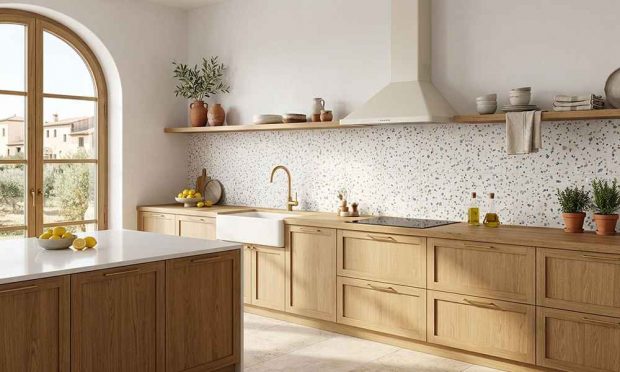
Terrazzo has moved well beyond its original flooring use. As a splashback, it brings genuine warmth thanks to the natural variation in each fleck of stone or glass.
It pairs amazingly with warm wood worktops and brass fittings, leaning into a relaxed, Mediterranean-influenced palette. Because no two terrazzo panels are identical, it’s worth seeing a full-size sample rather than judging from a small swatch.
| Pro Tip: When installing splashback tiles like terrazzo, ask your installer to lay panels out in advance, since the natural variation between pieces can throw off the pattern if placed at random. |
Luxury with Marble-Effect Splashbacks

For kitchens with a more minimalist decor direction, marble-effect porcelain tiles give the look of natural stone with none of the staining risk that real marble carries in a working kitchen.
It pairs perfectly well with stone-effect worktops, patterned floor tiles, and pared-back cabinetry, and because the veining is printed rather than natural. It’s far easier to match across a full wall.
Depth With Fluted Wall Tiles
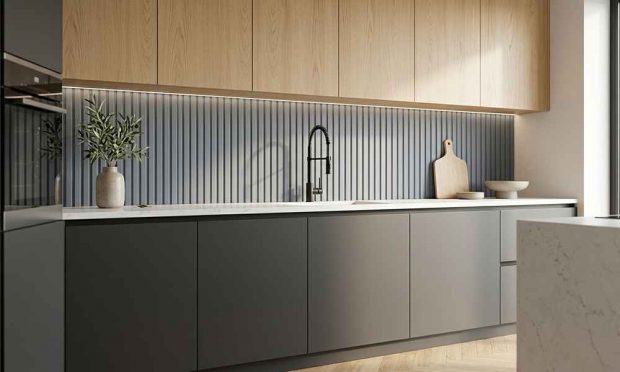
Fluted or reeded tiles are one of the most interesting textural trends in UK kitchens right now. The vertical ribbing catches the light differently at different times of the day, giving the splashback a sense of architectural detail that flat tiles are not able to manage.
As one of the interior designers puts it, textured wall tiles like this need breathing room;
thus pair your fluted splashback kitchen tiles with plain worktops and simple cabinet designs to keep the focus on the texture of the fluted tiles.
Victorian-Inspired Patterns: A Heritage Charm
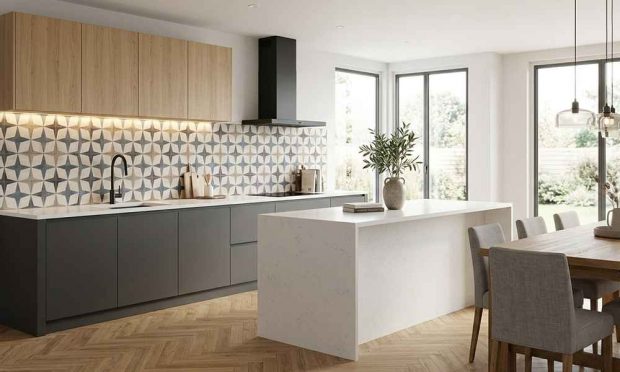
Decorative patterned tiles with Victorian roots suit period properties especially well, but they are increasingly gaining popularity in contemporary kitchens too, used as a border or a feature strip rather than a full wall.
The trick with heritage wall tiles is restraint: let the pattern be the statement, and keep everything else deliberately plain.
Bold Geometric Patterns
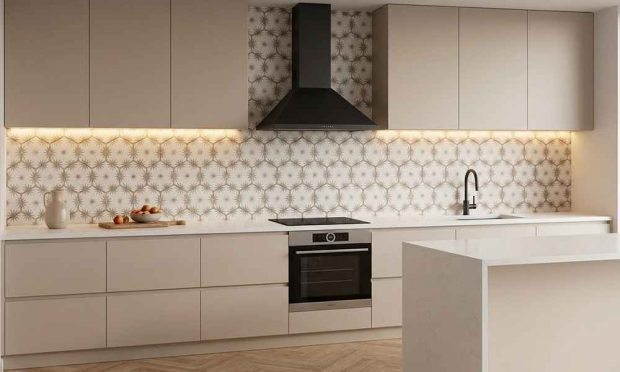
For a kitchen that wants a genuine focal point, geometric tiles are a way to go. Hexagons, chevrons, or interlocking shapes create one instantly.
The key design rule is balance: a bold geometric splashback tends to work best with simple cabinetry and understated worktops, rather than competing with other patterned surfaces.
Classic Metro Tiles in Blue
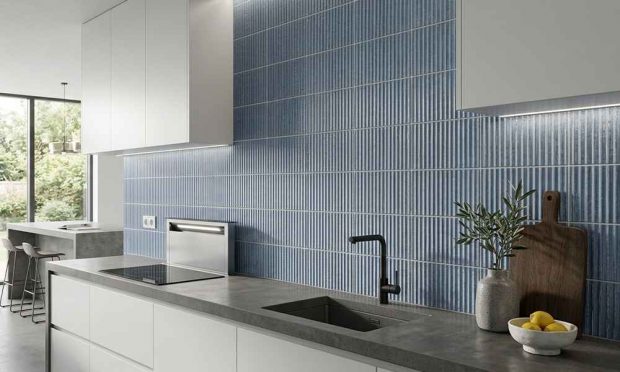
Subway tiles are known as the king of kitchen backsplashes. Their shape remains genuinely timeless, and when it comes to deep blue metro tiles, it takes that familiar rectangular form and gives more personality without losing the classic proportions.
It sits comfortably alongside white cabinetry, wooden worktops and brass tap fittings, and being porcelain, it holds up well to daily wear behind the hob without staining. It is one of the most flexible options on this list for kitchens that might be decorated in stages, and with a few simple steps to keep porcelain looking glossy, it’ll stay that way for years to come.
Sophistication in Polished Green
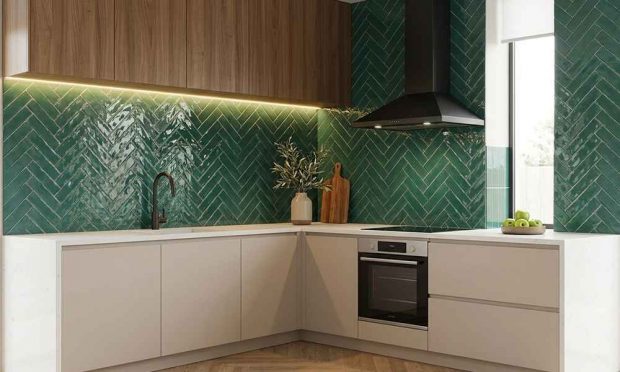
Polished green tiles make the perfect statement in the kitchen and have been a popular splashback colour for the past few kitchen design cycles. Aside from dark green, sage, olive and emerald all read differently depending on the kitchen design and the light and finish intended.
A glossy, polished green tile reflects light back into the room and can make a small kitchen space feel less closed, while a matte finish in the same colour reads calmer and more traditional.
Turning the Cooker Alcove into a Feature
A recessed cooking area is one of the most overlooked opportunities in a kitchen. Rather than treating it as an extension of the main splashback, it can be tiled differently, a contrasting colour, a bolder pattern, or a different tile shape entirely, to give the whole wall a sense of intention rather than uniformity.
Mixing Materials, Textures and Worktops
Not every splashback needs to match a single palette. An eclectic approach, combining two tile finishes, or pairing a patterned tile with a plain run either side, can suit a kitchen that’s been put together gradually rather than designed all at once.
| Pro Tip: Stick to two dominant textures at most, and keep everything else, worktop, cabinetry, flooring, deliberately quiet. Go beyond two and a kitchen starts to read as cluttered rather than curated. |
The general rule designers apply is to limit any scheme to two dominant textures at most, so the mix reads as considered rather than accidental.
Choosing Tile Styles That Will Stand the Test of Time
With so many trend-led options available, it’s worth pausing on longevity. The philosophy most designers return to is balance: choose one element for personality, colour, pattern or texture, and keep everything else in the kitchen quiet enough that the splashback doesn’t feel dated in five years. A tile that complements the existing worktop and cabinetry, rather than working against it, tends to outlast whatever’s trending this year.
Anyone trying to remodel or design their kitchen space starting this search is generally better served browsing by category rather than by trend. A dedicated range of wall tiles from large format to patterned style makes it easier to compare finishes side by side, and a focused kitchen decorative wall tiles selection narrows things further to what’s actually practical for a splashback.
A Note on Installation and Upkeep
Splashback tiles are a manageable DIY project for anyone comfortable with basic tiling, though getting the adhesive, spacing and grout right matters more here than on a floor, since the wall is at eye level.
Upkeep depends heavily on the tile type. Porcelain is generally the easier option to live with day to day, thanks to its low porosity, while glazed ceramic still performs well behind a hob with regular cleaning.
In Short
The right splashback tile, from popular tile suppliers like Royale Stones, depends less on what’s trending and more on how a kitchen is actually used and how long it needs to look good. Herringbone and metro tiles offer safety and flexibility; terrazzo, marble-effect and bold colour bring in personality; texture and pattern work best used sparingly rather than everywhere at once.
Whichever direction suits your kitchen, the tiles behind the hob are one of the few design decisions in a home that are genuinely easy to get right and satisfying to get exactly to your own taste.
Frequently Asked Questions
What is the most timeless kitchen splashback tile style?
Subway and metro-style tiles have remained some of the most consistently popular choices in the UK and around the world. Thanks to their affordability, versatility and broad visual appeal, they give your house a high resale value.
Which kitchen splashback materials are easiest to clean and maintain?
Large-format porcelain and glazed ceramic tiles are the easiest-to-maintain kitchen tiles. Since these tiles introduce fewer grout lines and have a non-porous surface, both of these surfaces reduce staining and can handle daily wipe-downs pretty well.
Should a kitchen backsplash match the countertop or contrast with it?
Both of them work; it depends on the home design you are planning. Matching splashbacks and worktops create seamless kitchen space, giving a calmer look. Contrasting the two is a common choice in modern kitchen spaces that require higher visual interest.
Are peel-and-stick kitchen splashback tiles worth it?
They are budget-friendly, rental-friendly, and a low-commitment option for your kitchens. However, they have a lifespan of 3-5 years against 25 years for properly installed ceramic kitchen tiles or porcelain wall tiles.
What backsplash tile ideas work best for small kitchens?
Vertical herringbone layouts, light coloured subway tiles, Dijon limestone herringbone tiles, and reflective mosaic finishes all look their best in small kitchen spaces. They feel brighter in compact kitchens and less boxed in.