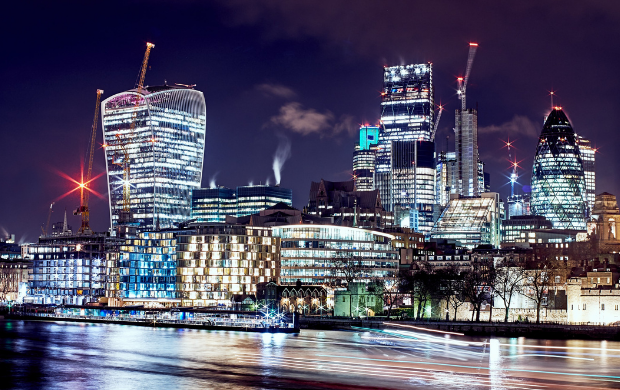
The best nights in London rarely come from a minute-by-minute schedule. Choose one strong anchor, match the neighbourhood to the mood, and leave enough room for the city – and the company – to surprise you

A successful London evening begins with one clear idea, not ten reservations.
There is a particular kind of London evening that feels effortless from the outside. The table is ready at the right moment, the next stop is close enough to reach without watching the clock, and the conversation has space to find its own rhythm. It can look spontaneous, but the real trick is not a lack of planning. It is knowing what deserves to be planned and what should be left alone.
London offers an almost unreasonable number of possibilities after dark. That abundance is part of its charm, but it also tempts people into treating an evening like a military exercise: drinks at seven, dinner at eight, a show at ten, another bar at eleven and a taxi booked before anyone knows whether they are enjoying themselves. A more sophisticated approach is lighter. Set the tone, secure one essential booking, remove the obvious friction and then allow the evening to breathe.
Begin With the Mood, Not the Booking
Before opening a restaurant app or checking what is on, decide how you want the evening to feel. A polished cultural date, a quiet dinner, a celebratory night out and an intimate catch-up all require different settings. The mood should guide the bookings, rather than being forced to fit whatever happened to have a table available.
It also helps to be honest about energy levels. A visitor arriving after a full day of meetings may appreciate a beautiful hotel bar and an unhurried dinner more than a cross-city itinerary. Someone who knows London well might prefer a late exhibition followed by a neighbourhood restaurant. If the aim is conversation, choose rooms where conversation is actually possible. If the occasion is celebratory, a little theatre and ceremony may be exactly right. Clarity at the beginning prevents compromise later.
Give the Evening One Anchor
Most memorable evenings need only one fixed point. It might be dinner at a restaurant you have genuinely wanted to try, a concert, a theatre performance or a late-opening exhibition. That single reservation gives the night shape without turning it into a timetable.
Everything else can remain flexible. Meet nearby for a drink rather than committing to a second booking. Keep two possible places in mind for afterwards, but decide between them according to the mood. Even a carefully planned evening benefits from one moment in which nobody has to say, “We need to leave now.” The aim is to create momentum, not pressure.
Match the Neighbourhood to the Tone
London is not one city after dark; it is a collection of neighbourhoods with very different personalities. Choosing the right area does more for an evening than stacking up famous addresses.
South Kensington works when the mood is polished and cultural. Its museums, elegant streets and well-run dining rooms make it easy to move from an exhibition or concert into dinner without changing the character of the night. Chelsea is more social: good for a long meal, a discreet cocktail and people-watching, especially when the occasion calls for style without too much formality.
Notting Hill suits a softer, more personal evening. The streets feel residential, the pace is less ceremonial and the best plans often involve a short walk between two places rather than a procession of taxis. Mayfair, by contrast, is at its best when you are happy to embrace a degree of occasion. Service is more formal, entrances are more theatrical and the evening can feel special before the first drink arrives.
Marylebone offers another kind of elegance – quieter, confident and less interested in spectacle. It is a strong choice for people who want excellent food and conversation without feeling as though the room is performing for them. Whichever area you choose, resist the urge to collect neighbourhoods. A night that stays within a compact part of London usually feels richer than one spent looking at the city through a car window.
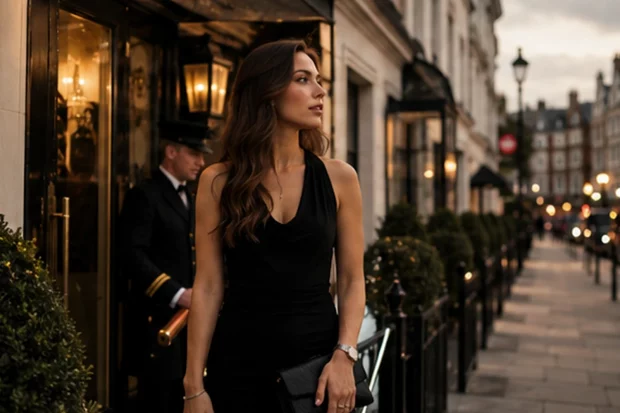 Choose a neighbourhood that supports the mood rather than spending the night crossing the city.
Plan the Transitions, Not Every Minute
More evenings are spoiled by bad geography than by bad taste. A restaurant may be perfect on its own, but less appealing if reaching it requires a forty-minute journey at the most enjoyable point of the night. Check walking times, realistic taxi times and where you will be when a venue closes. London distances can look manageable on a map and feel much longer in rain or traffic.
Plan the transitions rather than every minute. Allow enough time to arrive calmly, but avoid filling every gap. A twenty-minute walk through a familiar neighbourhood can become part of the evening; a rushed journey across town rarely does. It is also worth identifying one nearby option for a final drink, without reserving it. That small amount of preparation preserves spontaneity while removing the awkward search for somewhere suitable at 10.45pm.
Dress for the Room – and the Weather
The most convincing London style is usually appropriate rather than conspicuous. Dress for the room, the company and the weather – not only for the photograph you might take on arrival. A beautifully cut jacket, an elegant dress or polished separates will travel across most sophisticated settings more comfortably than anything overly theatrical.
Check the venue’s dress code, but also consider what happens between venues. Shoes should survive a short walk, an outer layer should work with the outfit, and a compact umbrella is often more useful than another accessory. London rewards people who look composed without appearing over-rehearsed. The same applies to grooming: considered, personal and comfortable tends to read as more luxurious than perfection pursued too aggressively.
Choose Your Company With Care
The person beside you will shape the night more than the menu, the view or the bill. Good company does not have to mean constant performance; it means ease, mutual curiosity and a shared understanding of what the evening is meant to be.
When an introduction begins online, take time to read the profile carefully and communicate directly before meeting. Recent information, consistent details and clear expectations matter. Agree on timing, the general plan and any practical boundaries in advance, so neither person has to negotiate the basics in a crowded lobby.
For adults considering private companionship, uEscort’s London directory offers a practical way to browse profiles by area and availability before making contact. A directory can make the initial search more structured, but it should never replace judgement. Verification tools are useful signals rather than guarantees, and respectful communication remains the most important filter.
The best arrangement is one in which both people understand the tone of the meeting. A formal dinner, a relaxed drink and an evening connected to a work event are different propositions. Stating that clearly is not unromantic; it is what allows the evening to feel natural once it begins.
 Good company, clear communication and a comfortable setting matter more than spectacle.
Make Discretion Feel Effortless
Discretion is often misunderstood as secrecy. In practice, it is simply good social etiquette: respecting another person’s privacy, attention and boundaries without making a performance of it.
Keep phones away from the table unless they are needed. Do not take or share photographs without clear permission. Avoid asking intrusive questions simply because an evening feels intimate, and do not assume that private details are yours to repeat later. Punctuality matters too. Arriving late without warning sends the message that the other person’s time is flexible and yours is not.
Practical safety should feel equally calm. Confirm the meeting place, arrange your own transport, keep payment and booking details clear where relevant, and choose public, reputable venues for an initial meeting. If plans change, say so directly. Sophistication is less about expensive surroundings than about making the other person feel considered and secure.
Know When to Leave the Evening Open
A well-planned evening should have a clear beginning and a flexible ending. There is no prize for adding one more bar when the night has already reached its natural high point. Sometimes the best decision is a short walk, a final drink in the same building or simply leaving while everyone is still enjoying themselves.
It helps to know the practical options before you need them: where taxis can stop, when the last convenient train leaves and whether the hotel bar remains open. Then forget the timetable until it becomes useful. An elegant ending is unhurried, considerate and free of the frantic search for “what next?”
The Art of Leaving Room
The most sophisticated London evening is rarely the one with the most reservations or the largest bill. It is the one in which the neighbourhood, the pace and the company seem to belong together.
Choose the mood first. Give the night one strong anchor. Keep the distances sensible, communicate clearly and leave enough empty space for a genuine moment to occur. London will provide the atmosphere; good planning simply makes sure you are present enough to notice it.