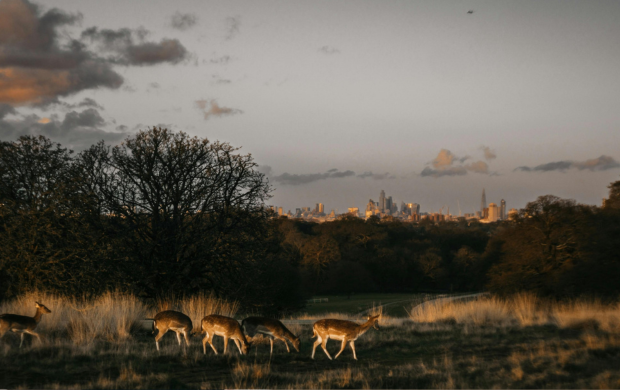
The UK countryside is so rich and diverse that even long-term residents are surprised by its landscape. Rural Britain has landscapes that change in character completely within the drive of an hour, from limestone valleys to heather moorland, from old woodland to spectacular coastal cliffs. Knowing what the various parts of the world can offer, what to anticipate in rural travel, and how to reach countryside destinations makes these places not just a mere possibility but truly interesting places to explore. Hotel break deals in rural areas provide structured access to scenery worth exploring.
The Lake District and Its Particular Character
The Lake District is a unique region of England, with a combination of mountain ranges, glacial valleys, and large bodies of water. The region draws large crowds of tourists, especially in summer and on weekends. However, it is also appealing to those who are willing to explore beyond the most over-advertised honeypot sites.
Keswick and Windermere, respectively, anchor the north and south ends, and each provides an accommodation base with good access to the surrounding fells. Less crowded, but equally dramatic scenery can be found in quieter valleys like Borrowdale and Langdale. The scenery is rewarding for those willing to walk, as the best views are at higher elevations rather than at the bottom of the valleys.
The Yorkshire Dales and Limestone Country
The Yorkshire Dales are a softer landscape than the Lake District, but with a different character of its own due to the underlying limestone geology. Fields are divided by dry stone walls ascending the sides of valleys to open moorland. The villages are constructed of local stone in the bottoms of valleys along rivers that have cut deep through the underlying rock.
Malham, Grassington and Hawes are practical starting points, with accommodation available and easy walks along rivers, or more challenging walks across the moors. The region appeals to people who admire pastoral beauty and the specific light created by limestone landscapes.
The Cotswolds and Their Villages
The Cotswolds belong to another type of rural landscape, which has been as much influenced by human habitation as by the geology. The villages of stone, honey-coloured, many centuries old, are placed upon rolling agricultural land, which is not dramatic like mountain country, but which has a settled, harmonious air which many find most attractive.
The most popular villages include Bourton-on-the-Water, Stow-on-the-Wold and Broadway, which are pretty but usually busy. Smaller villages like Snowshill, Guiting Power, and Upper and Lower Slaughter share a similar architectural character and attract fewer visitors. It is an area best explored leisurely, visiting gardens and places that appeal to those who appreciate aesthetic harmony over dramatic nature scenes.
Coastal Landscapes Worth Discovering
The coast of Britain is exceptionally diverse over a comparatively small distance. The North York Moors border the sea in cliffs that offer some of the best coastal walking in the country, linking villages like Robin Hood’s Bay and Staithes, which still have an authentic working feel despite the tourism. The north coast of Cornwall is a mixture of precipitous cliffs and beaches, both small coves and long strands.
The Northumberland coast is less frequented than the southern ones, and has long sandy beaches, castles at strategic points along the shore, and the tidal island of Lindisfarne. This coastline is especially attractive to those who want more peaceful experiences because of the relative absence of crowds, even in summer.
What Rural Accommodation Involves
Hotel breaks in the countryside differ from those in the cities in several ways worth knowing before travelling. There is a lack of or restricted access to public transport, and access to cars is virtually necessary to go beyond the immediate surroundings. Dining out in the evenings is limited to the hotel or a drive to the local villages. Mobile signal coverage may be intermittent, especially in valley areas.
These restrictions also limit it. The lack of convenience in urban settings creates distance from routine, making rural travel refreshing. Hotels that provide dinner and breakfast do not require one to drive upon arrival, therefore, enabling one to relax properly instead of making additional logistical arrangements.
Seasonal Considerations
Seasons vary significantly in the countryside. Spring heralds wildflowers and more daylight. Summer is the most predictable season with the most crowds. Autumn brings dramatic colour change and pleasant walking temperatures. In winter, the structure of the landscape covered by summer vegetation is visible, but daylight is very limited, and the weather can be really difficult. Knowing these seasonal attributes enables journeys to be scheduled for the preferred experience, rather than the trip failing due to the high summer, which may seem like the logical choice.