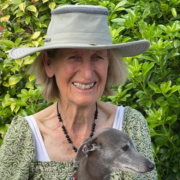
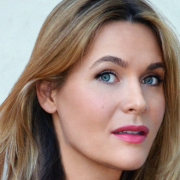
Celia Walden is an author, columnist, feature writer and US Editor-at-large for the Daily Telegraph. Last summer, Universal International Studios and Working Title won the rights to her forthcoming novel, Little Hands. She will executive produce the series alongside 42’s Peter Dealbert, Josh Varney and Ben Pugh.
As told to Rachel Walsh
Hi Celia. Your next book, Little Hands – about a British girl befriending female thieves targeting the French Riviera’s wealthy – sounds like a masterpiece in the making. Where in London do you write, and how do you overcome writer’s block when it strikes?
I have an office at the top of the house where I’ll write from 8 or 9am until 4ish. I became obsessed with noise-cancelling headphones and Loop earplugs (I sometimes wear both together) during the pandemic, and I now can’t live without them. Or toothpicks. Or vats of this weird and wonderful coffee called Flow State that’s meant to make your creative juices, well, flow.
I’ve never suffered from writer’s block, but my dad did give me a great piece of advice when I started working as a journalist, which was “whenever you get stuck, get up from your desk and go and get a glass of water – or get anything. But don’t just sit there staring at a blank screen.”
You’ve said your social columnist days sparked your fascination with the darker sides of privilege. At a West London party, what three red flags suggest someone might be shadier than they appear?
I think shadiness is always obvious in the eyes first. There’s a darting quality that tends to be the first red flag. Then, when people are overly vague about what it is that they do – that’s another. And lastly, I always feel uneasy if people ask too many questions about me. You feel it’s a ploy to avoid saying too much about themselves…
You once remarked that in London, unlike LA, “you never know where you’ll be at midnight, let alone six in the morning.” What’s been one of your most memorable nights out in the city?
I must have been very young when I said that! I can’t remember the last time I was still going past 2am. I’d find it hard to pick the most memorable night I’ve had in London – there have been so many, but one I often laugh about with my best friend was a summer night in the early Noughties. It was during my gossip columnist years, and I’d been invited to the launch of a smoothie brand in West London. They had a tiny two-seater banana-shaped car there, and at some point we ended up careering around Shepherd’s Bush in it. I still spontaneously burst out laughing when I think about it…
You’ve interviewed many intriguing figures from around town. Have any of them taught you something that’s proved useful personally or professionally?
I think you learn something from every interviewee, whether it’s a nugget of wisdom, how to be or not to be… The privilege of being able to talk to, say, an Auschwitz survivor like Leon Greenman, whom I had the honour of interviewing when I was 23, is something I will never either forget or take for granted. It gives you an understanding of history no textbook could ever match. And even speaking to – at the very opposite end of the spectrum – someone with the depth of a piece of paper, like Kylie Jenner, you learn something. (She was a ghastly specimen, who scarcely bothered to look up from her phone for the duration of the interview, so that tells you just how much early fame can erode a person’s manners and grace).
Your Telegraph columns often dissect performative wokeness. Are there any examples you’d happily banish from West London life?
I’m happy to say that West London life seems to be becoming a little less performatively woke, as it is everywhere, as far as I can tell. Then again, whenever I feel we’ve reached peak woke, I’ll open the papers and see a news piece about “manholes” being renamed to be more inclusive, and my heart drops…
You’ve noted how social media complicates today’s London childhood compared with your own. Despite that, what do you value most about raising a child here?
I do think we’re so lucky when it comes to our parks in London. I was born in Paris, and my mother is always saying how she would struggle to find even the tiniest little concrete playground for me and my brothers to play in there. My daughter and I spend so much time in Hyde Park, Holland Park and Kew Gardens, and I can never get over how incredible it is to have these extraordinarily beautiful green spaces right in the middle of our heaving city.
Growing up in a “no TV” household must have shaped your perspective. What sort of screen-time boundaries feel right for parents now, when children consume so much through YouTube and elsewhere?
I’ve always been very tough on screen time with my daughter (and lax in other ways, believe me). There are things I try to force myself to care about as a mum (sugar) and things I find I instinctively feel passionate about. Phones and social media are clearly the most noxious things for kids. I can’t believe how long it has taken us to wake up to this, and I will fight tooth and nail for my daughter never to be on social media…
You’ve said you don’t worry about being usurped by AI. Has it made your working life any easier in recent years, or simply more surreal?
With fiction, I just don’t believe that human experience can ever be replicated in as interesting a way. I’m sure AI is and will be game-changing in so many fields, like medicine etc, but at the root of every juicy novel is the writer’s human experience, and if you’re just cobbling together facsimiles, it won’t have the same impact. In terms of my working life, AI has only proved useful in a fact-checking way with articles.
You’re known for being dedicated in the gym. Which workouts or classes help you stay balanced when your schedule is full?
I love to do Pilates and spinning at the Rebel gyms and I’m a member of Roar, where I do a load of weights-based exercises with a vicious but brilliant trainer, James Castle-Mason. It does make me laugh that exercise is now the only area in life where you’re allowed to be told “push beyond your comfort zone” (and trust me, your delicate mental health will survive!).
What are some of your favourite novels set in London, and why do they resonate with you?
London Fields by Martin Amis will always be a favourite, and Louise Doughty’s Apple Tree Yard, which, again, makes London feel simultaneously sinister and sexy…
Describe your perfect Saturday in West London…
An early workout at Roar in Kensington, followed by a walk down to St Clair on the Portland Road in Holland Park. A spot of shopping at The Cross followed by lunch either at Julies, the Pelican or Canteen on the Golborne Road. Then a facial at Teresa Tarmey on Kensington Park Road (her Riviera Red Carpet Facial is life-changing… or at the very least face-changing), followed by an afternoon in bed reading with my two Burmese cats, Dennis and Bobbie.
London writers such as the late, great Edna O’Brien, Sophie Kinsella and your much-loved interviewee Jilly Cooper uplifted us by staying prolific throughout their lives. Do you think you’ll always write?
I do miss Jilly! She was a blueprint of how to live your life. So determined to squeeze every ounce of joy from it. And so naughty. I interviewed her a few times, and it always felt more like she was interviewing me. The last time I went to her house, she suddenly leant forward and said: “Are you faithful to Piers?” I’m happy she got to revel in a fresh wave of Jilly-love with Rivals before she died. I think she remained as happy and dynamic as she was at 20, even in her last years, precisely because she kept on working. I never intend to stop, but I may find myself doing more writing for the screen over the next few years. It’s a tricky art to master, but I’m up for the challenge.