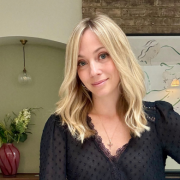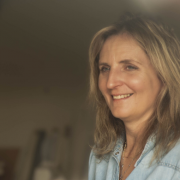
What inspired you to transition from your 30-year modelling career to starting Alpaca Apparel?
The alpacas were my inspiration! Alpaca Apparel started because of shearing our animals for the first time in 2021. I couldn’t believe the amount of beautiful fleece that came off them, and was amazed that nobody really did anything with it. Then it became about showing that we don’t have to import alpaca from South America, and that you don’t have to accept fast fashion. There is another way. Conscious luxury is knowing exactly where something came from, a garment you can trace back to the alpaca that grew the fibre, with nothing hidden.
Tell us about how you came to own a 30-strong alpaca herd…
There was some land that came with the property we were doing up in the New Forest. These fields had previously stocked cattle and horses and weren’t in a very good state. Plus, being in the middle of the Forest, we had deer, ponies, and pigs regularly visiting!
Once we had redone all the fencing and drainage to make it good again, we thought it would be lovely to have some alpacas there, as they are low-impact and really help with regenerating the soil and the land. We started off with a small herd of nine huacayas in 2020. Then that just kept on growing year on year with our breeding program and the introduction of the suri breed (there are two types of alpaca with different styles of fleece). Fast forward to 2026, and we have 38 of them grazing happily out in our fields!
The brand ensures that every garment has a direct connection to the alpaca that provided the fleece – how does this work?
Everything is traceable. The fleece comes from our own herd and from local friends in the New Forest, and is milled at Two Rivers Mill, a small family-run mill in Northern Ireland. It is then knitted at the Knit Design Centre in Leicester. Each piece can be traced back to the alpacas that grew the fibre, so when you wear one, you know where it came from. Our line is “From the alpaca to the apparel”, and I mean it literally!
You recently made your London Fashion Week debut. Congratulations! How did it feel to take on a completely different role after 30 years of modelling?
It was certainly very different to walking runways in the 90’s, that’s for sure!! Though enjoyable, it was a surreal experience as I don’t think I had really considered myself as a designer until that point. I have always felt that I was just doing something to prove that our UK alpaca fibre and knitting industry had something to offer, and I wanted to be the one to show the world. I did feel awkward, though, walking out at the end of the show. I wasn’t quite sure whether I should strut my stuff or try to remain professional! I hope I managed to come across as the latter… until I went backstage and jumped around excitedly like a little kid!!
Which was the first piece you created, and how has the collection developed since? Do you have any favourites?
The piece that had been in the pipeline for the longest was The Lounge Suit. That was what I originally wanted to create when I first started the whole idea of doing something with the alpaca fibre. To see it walk down a runway on a beautiful model, moving and draping exactly as I’d envisaged, was a real pinch-me moment.
My favourites are always going to be the wraps! They are just the most versatile items in the whole collection and, out of everything that we make, they’re the most popular. I couldn’t be without mine. It comes everywhere!
You limit production to 20 items per design – how does this help with sustainability?
It means we only make what will be loved, so there is nothing wasted and no deadstock. Also, as we are only working with a limited supply of annual fleece harvest, making garments in small runs keeps the whole chain close and accountable, and it makes each piece rare. We want people to buy less but better and keep it for life.
Tell us about your new life in the New Forest. How does it compare to your old life in London?
Years of London life as a model meant constant movement, uncertainty and noise. I still love London and get back regularly, but they say home is where the heart is and mine has been claimed by nature! Now my days start with the herd, with proper air and space to think. I wouldn’t call it slower as such, because the farm is just as busy, but it’s a different kind of busy, and it’s work I can see and touch. Spending time with calm and gentle animals in a beautiful environment has also shaped the brand’s calm, unhurried feel.
What’s next for Alpaca Apparel?
Gifting season is nearly upon us, and the change in weather always brings a rush of requests for our alpaca wraps! We’ll be busy promoting British Alpaca Fibre and building on the positive response from the recent runway show. Hopefully, we will be showing the collection and telling our story to a wider audience, while keeping it small and exclusive. We’ll stay true to what the brand is: honest, quietly rare and rooted in the herd.