The piercing has had a quiet revolution. Out go the plated barbells. In comes solid gold, considered placement, and a very different conversation about what we actually want to wear on our bodies.
Something has shifted in the way we think about piercings. Not dramatically, not overnight, but in the way that real changes in taste tend to happen: gradually, and then all at once. Walk into any good jeweller in West London, and you will find customers asking questions that would have seemed surprisingly specific a few years ago. What karat is the gold? Is it internally threaded? Is this implant-grade? The days of picking up a barbell from a fast fashion accessories wall are, for a growing number of buyers, firmly over.
What the Specialists Are Seeing
Pierced and Lovely, a UK-based specialist in 14k solid gold and implant-grade titanium body jewellery with over a decade of experience supplying individual customers and professional piercing studios worldwide, has watched this shift happen in real time. “The conversation has changed completely,” says a spokesperson for the brand. “People arrive having already done their research. They know what they want in terms of material and threading, and they’re thinking about pieces they plan to keep, not replace. We’re also seeing much more interest in bespoke commissions, which tells you something about how people are now valuing this category.”
What People Are Actually Choosing
Solid 14k gold barbells worn in helix, industrial and cartilage piercings are among the fastest-growing product categories at specialist retailers. Implant-grade titanium, specifically the ASTM F136 standard, remains the material of choice for initial and sensitive piercings. Internally threaded pieces, where the mechanism sits inside the jewellery rather than on the post, have become a quality benchmark. Curated sets built across multiple placements are increasingly how customers approach the category, returning to add rather than replace.
Where to Start
For those making the transition, specialist retailers offer considerably more depth than the high street. Dedicated ranges of 14k gold barbells from Pierced and Lovely specify gauge, threading type and finish precisely, which matters far more than it sounds once you are wearing a piece every day.
The Numbers Back It Up
The global jewellery market is projected to grow from around $381 billion in 2025 to $578 billion by 2033, according to Grand View Research, with gold maintaining the largest material share throughout. Fine jewellery now accounts for approximately 68% of total global jewellery market value, according to industry analysis by Carat Trade, and demand is being led from the top down. Consumers are spending more deliberately and buying fewer pieces they intend to keep. Search interest in “14k gold piercing” and “solid gold body jewellery” has climbed consistently in recent years on Google Trends. In the UK, Astrid & Miyu grew revenue from £12.7 million in 2021 to £34 million in 2023, according to reporting by The MBS Group, with further significant growth projected through 2025. That is not the trajectory of a passing trend.
The Problem with Cheap
What drove so many people to reassess is, at its most basic, a matter of skin. Cheap body jewellery is almost always built around nickel, used as a hardening agent in the brass alloys sitting beneath gold-coloured plating. Allergy UK notes that nickel allergy commonly develops following ear piercing with metal jewellery, and research puts the prevalence of nickel sensitivity at between 8 and 19% of women in developed countries, making it the most common contact allergy overall. The plating wears. The skin reacts. The piece goes in the bin. And none of it ever looks quite like the real thing, however much it costs on delivery.
A Genuine Shift in How People Buy
What has replaced the impulse purchase is a fundamentally different philosophy. Buyers are now asking about material composition, threading type and gauge before they ask about price. The “buy once, wear forever” mentality, long applied to investment fashion, has arrived in piercing. Solid gold and implant-grade titanium have moved from specialist knowledge to baseline expectation, and the category has followed suit.
The Style Case for Fine Piercing
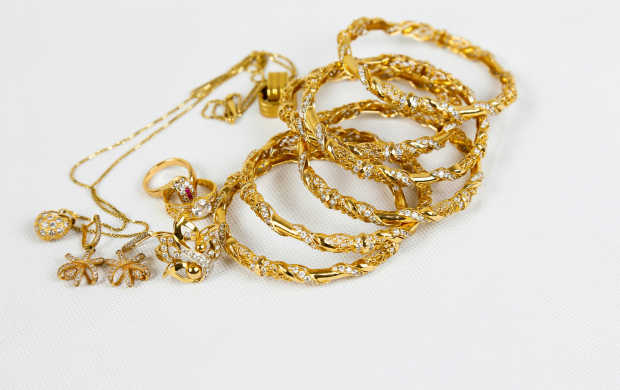
The curated ear, popularised by jeweller and piercer Maria Tash and now a fixture in fine jewellery conversations everywhere from NET-A-PORTER to Vogue, is built on intentionality. Each placement is considered, each piece chosen for how it sits alongside the others. Hailey Bieber, Rihanna, Zoë Kravitz and Florence Pugh have all been photographed with deliberately constructed ear stacks built around fine gold. The look is not loud. That is precisely the point. West London’s approach to this, as with most things, is to invest in quality and wear it without thinking about it again.
The Bigger Picture
Piercings are no longer a subculture signifier. They are an extension of fine jewellery, chosen carefully, invested in, and worn for years rather than months. The days of plated studs turning green are not quite over, but they are clearly numbered. The quietest luxury is often the one sitting closest to the skin.