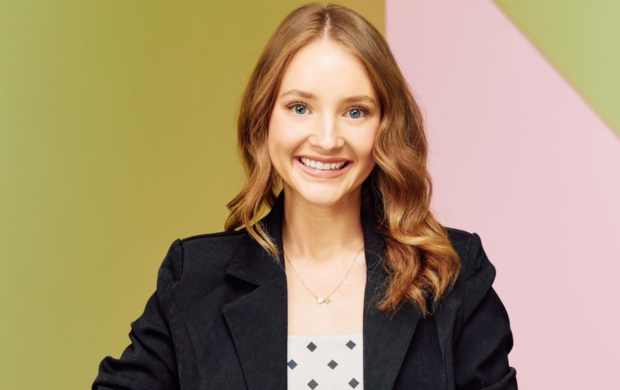
Hi Kayleigh! For anyone discovering you for the first time, how did your journey into acting and producing begin, and what sparked the idea for Raspberry Films?
My journey into acting and producing really started from a place of pure love for storytelling. I’ve been a cinephile since I was very young; Sundays in our house were dedicated to films, and we’d often watch three back-to-back. In between each one, I’d disappear and act them out myself, completely immersed in those worlds. Acting became this incredible outlet for my curiosity and creativity; it let me explore different emotions and perspectives in a way nothing else quite could.
As I moved into the industry professionally, that passion only grew, but I also became very aware of its challenges. One of the hardest parts for me was the waiting, the uncertainty of when the phone might ring. After a couple of years, I found myself surrounded by unbelievably talented people, and I couldn’t help but question why so many of them weren’t working as much as they deserved.
That was really the spark behind Raspberry Films. I wanted to create something proactive, a space that didn’t just wait for opportunities but helped generate them. Raspberry Films was born out of a desire to bridge the gap between independent filmmakers and creatives and the wider world of mainstream media, giving more voices the chance to be seen and heard.
Let’s talk about your new film, Pops. How would you sum it up, and what makes this story so special to you?
I was initially drawn to the project through the chance to work with David Thackeray, who I’m actually collaborating with again at the moment, and Max Ferguson, both incredibly talented individuals. It also gave me the opportunity to focus solely on acting, which I hadn’t done in quite some time. That in itself felt really refreshing, being able to fully step into a character without wearing multiple hats.
What was the moment you knew Pops was a project you had to be part of?
The story was the huge pull. The character was a lot of fun to play, but what really stayed with me was the heart of the film. Pops touches on themes surrounding dementia and the impact it has, not just on those living with it, but on the people around them. It’s something so many families experience, and I felt it was a story that could really resonate with and move audiences in a meaningful way.
You’re able to move seamlessly between acting and producing. Do you ever find one role influencing the other in unexpected ways?
In honesty, I wouldn’t necessarily say I move seamlessly between the two! But yes, they definitely influence each other in ways I didn’t fully expect.
Coming from an acting background means that when I’m producing, I have a real understanding of the creative and performance side of things. I think that perspective is incredibly valuable when working with actors and shaping a project.
On the flip side, when I’m acting solely on a project, it’s actually quite a shift for me. I become very aware of everything happening around me, how long the takes are running, whether there are any issues, and I find it quite hard to switch that part of my brain off. It’s like the producer mindset is always quietly ticking in the background.
You’ve built a reputation for championing new and underrepresented talent. What does a truly fair, inclusive film set look like to you?
I think a truly fair and inclusive set is something we’re all still actively learning how to build. It’s not perfect, and I don’t think it’s something you can just tick a box on.
For me, it starts with people feeling genuinely seen and heard. That means creating an environment where everyone, regardless of their background, experience, or role, feels comfortable contributing and knows their voice has value. Some of the best ideas can come from anywhere, and a good set makes space for that.
It’s also about access and opportunity. There are so many talented individuals who just haven’t been given the chance yet, so it’s important to actively open doors, not just say you will. That applies both in front of and behind the camera.
And then there’s the day-to-day culture on set, respect and communication. Making sure people feel supported and able to do their best work without unnecessary barriers.
Ultimately, it’s about intention and action lining up. Not just talking about inclusivity, but actually embedding it into how you hire and how you tell stories.
Your award-winning documentary We Are Home, is about displaced families living in Ukraine, and has been praised for its sensitivity. How do you approach telling real stories with care and responsibility?
With We Are Home, that sense of responsibility was there from the very beginning. When you’re telling real stories, especially those shaped by displacement and trauma, you have to approach it with a huge amount of care.
For me, it’s about listening first. Taking the time to really understand the people at the heart of the story, and making sure they feel in control of how their experiences are being shared. It’s never about speaking for someone, but creating space for them to be heard in their own voice. Sensitivity is also about what you choose not to show, as much as what you do. You have to constantly ask yourself why you’re telling the story, and whether it’s being done in a way that honours the people involved, rather than exploiting their experiences. Ultimately, it comes down to intention, being led by empathy, and recognising the trust that’s been placed in you to tell something so personal.
From the National Film Awards to Forbes 30 Under 30, you’ve had huge recognition early on. Do you take a moment to celebrate those wins, or are you always onto the next thing?
I’m very lucky to have close family and friends around me who really make the effort to celebrate those moments, and I’m incredibly grateful for them.
I think in my own mind, though, I do tend to move quite quickly onto the next thing. It’s just how I’m wired, I’m always thinking about what’s coming next or what needs to be done. That said, I’ve learned that those moments do catch up with me. A few days, weeks, or even months later, I’ll reflect on it all and actually allow myself to feel proud, both personally and of what we’ve achieved as a company.
Looking ahead, what kind of stories are you most excited to tell, and what do you hope people take away from your work?
Looking ahead, we’re focusing on more documentaries, as well as films and series with a strong social consciousness. For me, it’s about telling stories that connect with people, whether that’s making someone feel seen or encouraging them to think a little differently.
Pops will be released globally on Amazon Prime on 20th March.